Student Rooms in Pisa 2026: An Orientation Guide
Few places in Italy pack so much academic life into such a small area. Pisa is home to the University of Pisa, ranked first among large Italian universities (those with over 40,000 enrolled students) by the Censis report for graduate employability, alongside two special-status schools that attract candidates from across Europe: the Scuola Normale Superiore and the Scuola Superiore Sant'Anna. Enrolments continue to rise: as of 31 December 2024, UniPi recorded 7,024 new first-year students, up 5% on the previous year.
This growth has an immediate effect on the rental market. Every summer, thousands of people search for accommodation within the same narrow window of a few weeks, in a city small enough to cross on foot in half an hour. International students — with mobility dates confirmed late and no chance to visit flats in person — face the toughest challenge of all. This guide aims to level that playing field: real prices by neighbourhood, the right timing to act, and a booking method that keeps your deposit safe.
What Makes Pisa's Student Housing Market Unique
Pisa functions like a small Italian Cambridge: three universities woven into the urban fabric, with student services, libraries and canteens scattered across the neighbourhoods. This setup triggers a rush for accommodation that begins well before term starts — the best options are reserved months in advance. If you're looking for a room in Pisa for October 2026, you should start searching between July and August.
There is also a feature that sets Pisa apart from almost every other Italian university city: there are no so-called 'commuter neighbourhoods'. Most central districts are within a 20-minute walk of the main faculties, and a bicycle covers the rest with ease. In practical terms, this changes how you should think about your search: in Pisa, location doesn't determine how long you'll spend commuting — it determines how much you'll spend each month. The choice is almost entirely a matter of budget.
It's also worth factoring in the public housing channel, which plays a bigger role in Pisa than in most Italian cities. DSU Toscana allocates places in university residences: free for scholarship holders studying away from home, and at €262.50 per month for eligible non-winners in the 2026/2027 academic year. The application window opened on 20 July 2026 and closes on 7 September 2026 at 13:00. A 20% quota is reserved for first-year bachelor's or single-cycle master's students, with a further 20% of that quota set aside for students from non-EU countries. Bear in mind, however, that DSU considers a student 'away from home' only if they live in a municipality other than their course location that is more than one hour away by public transport. Places are limited and allocated by ranking order, with timelines that no one can predict in advance. Applying to DSU and searching the private market in parallel is the most sensible strategy, not a redundant one.
One practical advantage international students often discover only on arrival: Pisa has its own airport inside the city. Galileo Galilei sits just over a kilometre from the station, connected by the PisaMover, an automated shuttle that covers the route in around 5 minutes, running daily from 06:00 to midnight (until 01:00 from 1 June to 30 September) every 5 to 8 minutes. A single ticket costs €2.70 and a return €5.40; residents registered in the Municipality of Pisa can buy up to 6 journeys a month at €1.20. If you're flying in on a budget airline with two suitcases, it means reaching the centre with no taxi and no transfers: a detail that meaningfully cuts both the cost and the stress of day one.
**Napoleon, Vasari and the square that doesn't look academic**
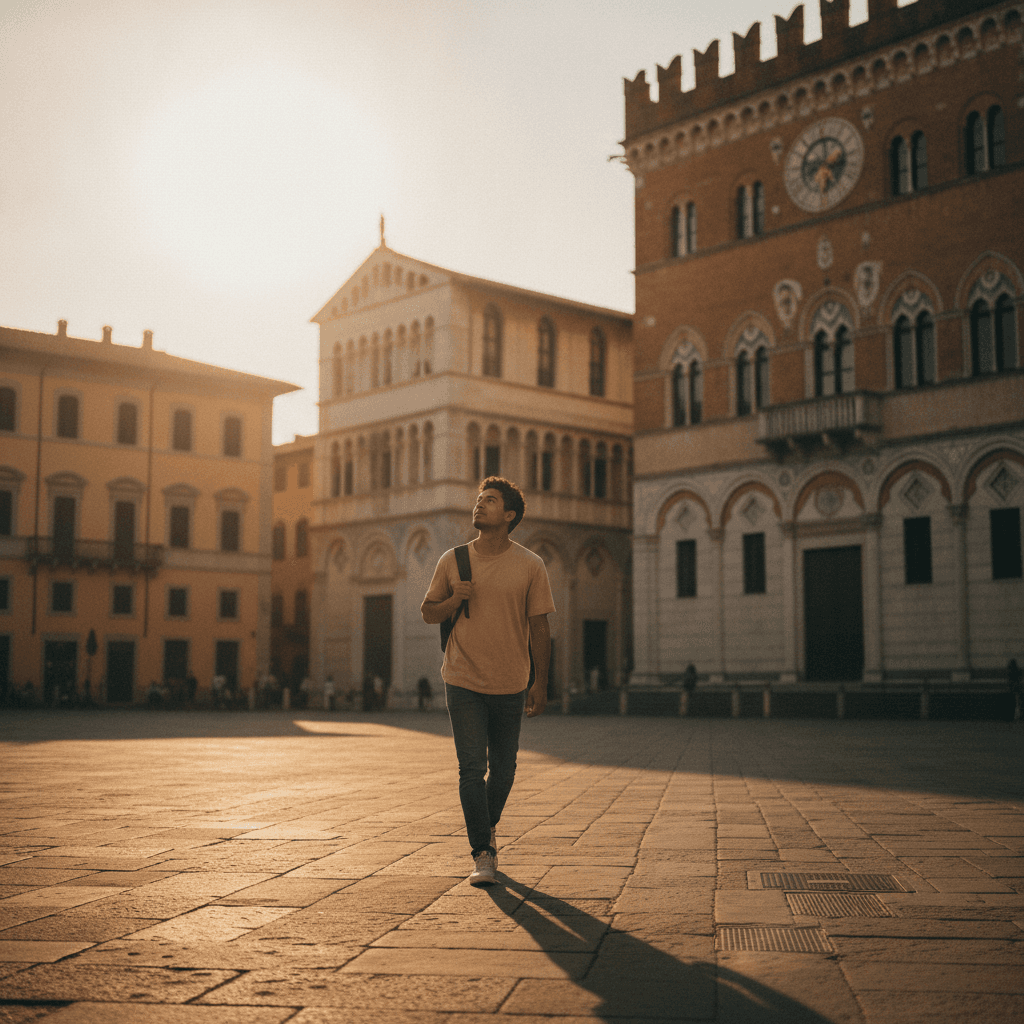
Piazza dei Cavalieri is the academic heart of Pisa today, but it wasn't built for students. The Palazzo della Carovana that dominates it was redesigned by Giorgio Vasari from 1562, commissioned by Cosimo I de' Medici to house the college of the Knights of the Order of St Stephen: a military and monastic order founded the year before to carry on the maritime legacy of the Pisan Republic and push back Turkish raids in the Mediterranean. The sgraffito façade, the stone window frames, the play of light and shadow: all of it was designed for a militia, not a lecture hall.
The turning point came with a decree signed by Napoleon on 18 October 1810. Tuscany was then a province of the French empire, and the decree established an "academic boarding house" in Pisa for twenty-five students of Arts and Sciences, conceived as a branch of the École Normale Supérieure in Paris. This was the birth of the Scuola Normale Superiore, and that word "Normale" pointed to norms: consistent methods for training those who would go on to educate citizens. The Napoleonic experiment lasted a single academic year, 1813-1814, and ended with the emperor's abdication. The Normale reopened decades later and settled permanently into Vasari's palace in 1846, where it remains.
Rent a room in Pisa's historic centre and you live inside those layers: a knights' palace turned school by imperial decree, and a square students now cross in flip-flops on their way to the library.
Finding Your Way Around: A Map of Student Accommodation by Neighbourhood
Historic Centre and San Martino
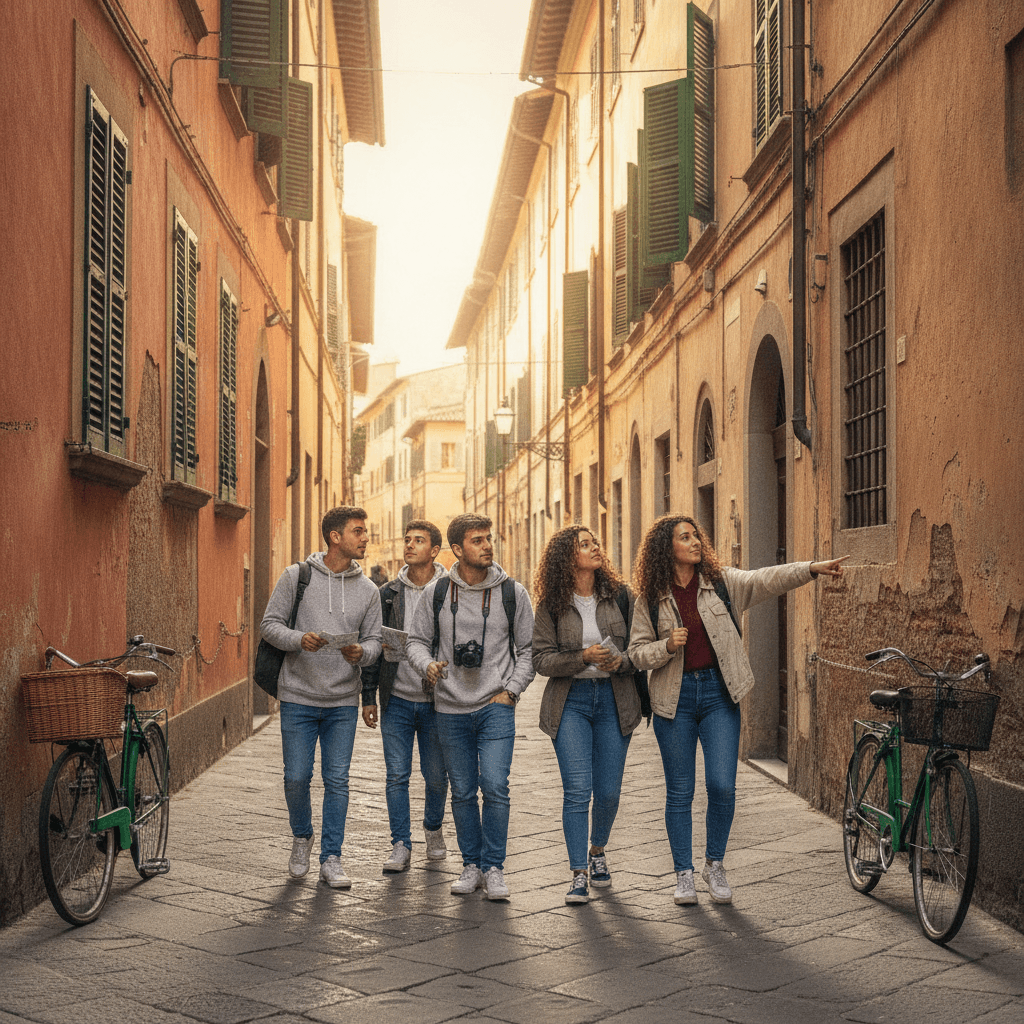
This is the heart of student life in Pisa. Piazza dei Cavalieri — home to the Scuola Normale — is just steps away, along with DSU canteens, libraries, cafés and faculty buildings: living here means you barely need to travel at all. The privilege comes at a price, and rents reflect it: between €500 and €650 per month for a single room, almost always bills not included. It's the natural choice for students at the Normale, or those studying humanities, law and political science.
Porta a Lucca
North of the centre, Porta a Lucca offers science students exactly what they need: the Polo Fibonacci (Mathematics, Physics, Computer Science) and Santa Chiara Hospital are close by, bus lines run frequently, and the area has green spaces and streets that stay lively in the evenings without being overwhelmingly busy. Single rooms cost between €450 and €600 per month. The neighbourhood has a mix of student flat-shares and quieter settings where housemates tend to study in the evenings — it's worth asking your host which you'd be joining.
Cisanello
East of the centre, Cisanello faces the Hospital Complex and the Faculty of Medicine. Its lower centrality is offset where it matters most: single room rents range from €350 to €500 per month, the most affordable bracket in the city. Students of Medicine, Pharmacy or Biology will find the best trade-off here, with public transport connecting them to the rest of Pisa.
San Francesco and Lungarno
This area bridges the historic centre and the university district, and much of its appeal comes from the Arno: some of the most sought-after listings in Pisa are found here, with direct views over the river. Rents align with the historic centre, between €500 and €650 per month. It's the go-to for those who want both logistical convenience and a pleasant environment to come home to.
Neighbourhood Comparison: Rents and Proximity to Universities
| Neighbourhood | Average single room/month | Nearest universities | Notes |
|---|---|---|---|
| Historic Centre / San Martino | €500–650 | UniPi, Normale, Sant'Anna | Very high demand — book early |
| Porta a Lucca | €450–600 | UniPi (Polo Fibonacci), S. Chiara | Ideal for Science and Medicine |
| San Francesco / Lungarno | €500–650 | UniPi, Normale | Lively atmosphere, river views |
| Cisanello | €350–500 | UniPi (Hospital Complex) | Most affordable, bus required |
Rents shown are estimates based on active listings during summer 2025–2026 and are, unless otherwise stated, bills not included.
What International and Erasmus Students Need to Know
If you're arriving on a mobility programme, you're entering a market largely shaped by domestic students. The differences play out across four concrete areas.
- Length of stay: An Erasmus semester typically lasts 5–10 months, while many landlords think in annual terms. Filter listings from the start for those that genuinely accept your dates — rather than finding out after several exchanges of messages.
- Multicultural environment: Living with students from other countries isn't a minor detail of the Erasmus experience — for many, it's the part they remember most. Some specialist platforms let you filter accommodation by the nationality and gender of existing housemates, before you even send a request.
- Payment security: Searching for a flat from abroad exposes you to the most real risk of all: paying a deposit to someone who doesn't exist. The practical rule is simple: never transfer money directly before you have the keys in hand, and favour platforms that hold funds until actual check-in.
- Host verification: Platforms that check the identity of every host before a listing goes live cut the risk of fraud and discrepancies between what you see online and what you find on arrival at the root.
How Safe Booking Works on ESH
On eshousing.com you can search for rooms in Pisa filtering by neighbourhood, price range, availability dates and housemate preferences (nationality, gender). The identity of every host is verified before their listing goes live — a check that happens upstream, before any student has seen the ad.
The booking process follows clear steps:
- 1Search and select: Browse available listings in Pisa, with photos and full profiles of the host and any existing housemates.
- 2Send multiple requests: You can submit several requests at the same time with no upfront charge. Payment is only triggered once a host approves your application.
- 3Protected payment: Funds are collected and held via Stripe, and are released to the host only 24 hours after check-in. If the automatic payment attempt at acceptance fails, you have 6 hours to complete it using an alternative method.
- 4Refund conditions: In the cases set out in the Terms and Conditions — most notably a verified substantial discrepancy between the listing and the actual accommodation — the refund is full and includes the ESH Commission.
The ESH Commission (or 'booking fee') amounts to 60% of the first month's rent + 22% VAT, up to a maximum of €350 VAT included. This cost is shown clearly and separately before you finalise payment. For landlords, registering on the platform and publishing listings is free.
Practical Tips for an Effective Room Search
- Start early: For the autumn semester, begin searching in July. The best options disappear within a matter of weeks, and those who start in September pick from what everyone else has passed on.
- Build a strong profile: Profile photo, home university, intended stay dates, languages spoken — hosts read all of this and base their decisions on it. A complete profile carries as much weight as a well-written message.
- Check the all-inclusive cost: In Pisa, many listings bundle utility bills into the rent, often between €50 and €80 per month. Always compare the total monthly cost, not just the headline figure.
- Be aware of ZTL zones: The historic centre is subject to restricted traffic zones. If you plan to get around by bike or scooter, check the restrictions for the area you're considering before committing.
- Confirm exact availability dates: Pisa listings show varying move-in dates, often spread across September to November 2026. Always ask for the precise date and make sure it aligns with your actual semester start.
- Factor in a bike. Pisa is flat and compact, and the bicycle is still how most students get around. It changes the maths on where to live, too: a neighbourhood that feels awkward on foot can be ten minutes away by bike. Before ruling out an area on distance, measure it by bicycle rather than on foot.
Start Your Room Search in Pisa with ESH
Pisa is a city best experienced by walking through it, and the right place to live is the foundation for everything else. Whether you prefer the quieter pace of Cisanello, the density of the historic centre near the Normale, or the convenience of Porta a Lucca for the Polo Fibonacci, the market has options across different budgets — but the best ones go fast, and every week you wait narrows your choices.
Browse available accommodation in Pisa on eshousing.com and send your requests with no commitment: payment is only triggered once you confirm your chosen place.
FAQ: Finding Student Rooms in Pisa in 2026
What is the typical price range for a single student room in Pisa? Rents range from €350 to €650 per month, depending on the neighbourhood. Central areas such as San Martino and San Francesco are at the higher end, while Cisanello is the most affordable option.
Which neighbourhood is best for Medical students in Pisa? Cisanello offers the closest access to the Hospital Complex. That said, Porta a Lucca is also a solid choice for students attending science faculties and Santa Chiara Hospital.
Can I find a room in Pisa for an Erasmus stay? Yes. Many student housing platforms cater for stays of 5–10 months, which corresponds to a typical Erasmus semester or academic year. Always check that the listing's dates are compatible with your mobility period.
How can I avoid scams when searching for accommodation in Pisa online? Prioritise platforms that carry out identity verification for every host and that protect your funds until check-in. Never transfer money via direct bank transfer or untracked payment apps before you have physically visited the property and received the keys.
When is the best time to start looking for a room in Pisa for the autumn semester? The ideal window is July to August. Demand is high enough that the most popular options are taken well before the academic year begins.