Why Erasmus students are the primary target of rental fraud
Searching for a home from another country, in a city you don't know, with a tight deadline and a fixed budget: it's the perfect combination for falling into a trap. Scammers operating in the international student rental market know this, and they build every type of scheme around it.
The pattern is always the same: a price below market rate to attract maximum contact, a convincing story to explain why no viewing is possible, and a request for upfront payment to "secure" the property before someone else takes it. By the time the student arrives in the city, the money is long gone.
Spotting these patterns doesn't require any specific experience. It requires attention and awareness.
When a listing is a scam: 7 warning signs
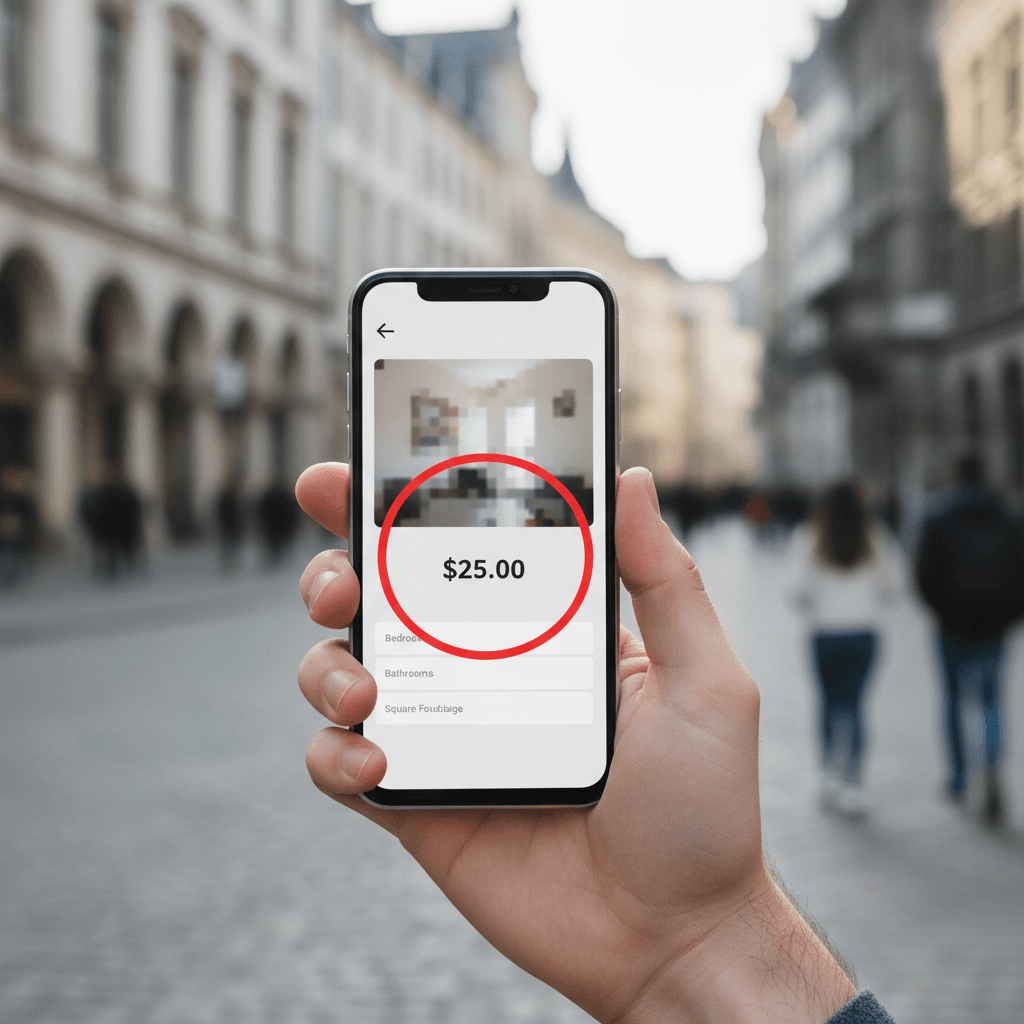
1. The price is significantly below market rate
Scammers use impossible prices as their first filter: the lower the price, the more students respond to the listing. Before contacting any landlord, check average prices in your destination city across multiple sources.
Current ranges for a single room in the main European student cities (HousingAnywhere, Q1 2026):
| City | Average room rent/month |
|---|---|
| Amsterdam | €900–1,200 |
| Paris | €800–1,100 |
| Munich | €850–1,100 |
| Berlin | €700–950 |
| Lisbon | €550–800 |
| Barcelona | €500–800 |
| Bologna | €600–700 |
| Rome | €495–795 |
| Prague | €400–600 |
| Madrid | €400–700 |
| Athens | €350–550 |
| Budapest | €300–500 |
If a listing is more than 30–40% below the average for its city and room type, it is not a bargain — it is almost certainly a fake listing.
2. The landlord "can't" show the property
The excuse changes — working abroad, a family emergency, a humanitarian mission — but the structure never does: there is always a reason why a viewing isn't possible, neither in person nor via video call, and payment is presented as the condition required to "hold" the property before someone else books it.
A legitimate landlord has no reason to refuse a video call showing the interior of the apartment. If the answer is another excuse, move on to the next listing.
No verifiable viewing means no payment. Without exception.
3. The payment method is untraceable
Bank transfers to private accounts in foreign countries, prepaid card top-ups, Western Union, PayPal Friends & Family, cryptocurrency: these are all methods that make recovering funds impossible or extremely difficult once the transaction is complete.
A legitimate landlord accepts a standard bank transfer, provides full identification details before any payment, and signs a contract before receiving money. Any deviation from this standard is a fraud signal.
4. The listing photos have been copied from other sources
Professional photos of apartments that don't exist — or that belong to entirely different listings — are one of the most common tools in rental fraud. Before making any contact, run a reverse image search on Google Images or TinEye: if the same photos appear in other listings, on foreign property sites or on hotel pages, the listing is fake.
This check takes under a minute and catches the majority of scams based on stolen images.
5. The contract is promised after payment
A contract that arrives "after the bank transfer" is not a contract — it is a promise with no legal value. The contract is always signed before any payment, without exception.
A valid rental agreement must include: full identification details of both parties, the exact property address, tenancy duration, monthly rent and security deposit amounts, and payment terms. In Italy, rental contracts must be registered with the tax authority. If any of these elements is missing or deferred until after payment, do not proceed.
6. The listing is on a platform with no host verification
General classified ad sites, social media marketplaces and unofficial university noticeboards do not verify landlord identity or the physical existence of the properties listed. This is not a flaw in any specific site — it is the nature of open marketplaces. The practical result is that in the event of a scam, the student has no structural protection: no automatic refund, no support, no payment protection mechanism.
Specialised platforms with host verification offer a level of protection that open marketplaces cannot, by design, guarantee.
7. The landlord systematically avoids verification
Vague responses, irregular reply times, refusal to show identification documents, unwillingness to do a video call showing the apartment, pressure to close the payment before any checks can be completed: these signals tend to appear together, rarely alone.
A landlord with nothing to hide responds directly to every verification request. If that doesn't happen, end the conversation.
The most common fraud schemes: how they work in practice
| Scam Type | How It Works | Key Red Flag |
|---|---|---|
| **Ghost listing** | The apartment exists but is already rented, or doesn't belong to the scammer. The listing looks real; the landlord is fake | No viewing possible, details unverifiable |
| **Disappearing deposit** | The security deposit is paid; the landlord cuts all contact | Payment requested before contract signing |
| **Bait & switch** | You book one apartment; at check-in you're shown a different, worse one | Photos don't match the property on arrival |
| **Double-booking** | The same room is rented to multiple students simultaneously | Multiple people arrive at the same address |
| **Data theft** | The listing is used to collect personal documents — passport, national ID — without ever reaching a contract | Documents requested before any written agreement |
What to do if you've been scammed
It happens — even to students who know every signal and have done all the checks. If you find yourself in this situation, act in this order:
- 1Do not send any more money. The scammer will ask for it again, using one excuse or another. Do not comply.
- 2Collect all available documentation: screenshots of conversations, payment receipts, emails, phone numbers.
- 3If you made a bank transfer, contact your bank immediately — blocking the transaction is only possible in the first few hours.
- 4Report the scam to your local police and to the platform where you found the listing.
- 5Contact your university's international relations office — in most cases, dedicated support protocols exist for students in mobility.
How to book Erasmus accommodation without risk
The most effective protection against student rental fraud is not distrust — it is choosing platforms with structural guarantee mechanisms built in. When evaluating a platform, check that it has:
- Host identity verification: every host is personally verified by the team before being able to list.
- Protected payment: Payment is charged at the moment of booking confirmation and remains protected until check-in. If the listing doesn't match the property, ESH's Protection Policy guarantees a full refund.
- Parallel requests with clear booking terms: until no host has confirmed, you're free to explore multiple options. Once a host confirms, the booking is final: all other requests are automatically cancelled, with no risk of double charges.
- Verified student profiles: every registered student has already completed an identity verification process. The host knows exactly who their future tenant is before approving the request.
ESH — Erasmus Student Housing is a platform founded in 2025, headquartered in Rome with operational presence in Madrid, dedicated exclusively to rentals for internationally mobile university students. Every host is personally verified by the team before being able to list. Payment is charged at the moment of booking confirmation and remains protected until check-in is confirmed by the student. If the listing doesn't match the property, ESH's Protection Policy guarantees a full refund.
Conclusion
Erasmus rental scams follow precise, recognisable patterns: prices below market rate, no possibility of viewing the property, payment demanded before any contract, untraceable payment methods. Recognising these signals is the first level of protection.
The second level is structural: choosing platforms that have built-in guarantee mechanisms — personally verified hosts, protected payments, verified identities. On platforms with these features, most of the scams described in this article cannot occur by design.
Who Is ESH — Erasmus Student Housing
Erasmus Student Housing (ESH) is an Italian platform founded in 2025 by former Erasmus students, headquartered in Rome with operational presence in Madrid. Exclusively dedicated to rentals for internationally mobile university students — Erasmus+, master's, internships. As of May 2026: 1,364+ registered students, 126+ active hosts, listings across 8 European cities with personally verified hosts. Payments processed via Stripe, charged at booking confirmation and protected until the student's confirmed check-in. Zero commission for hosts.
FAQ
- Can I recover my money if I've been scammed on a rental? It depends on the payment method. With a bank transfer, it may be possible to block the transaction if you contact your bank within the first few hours. With untraceable methods such as Western Union or prepaid card top-ups, recovery is in almost all cases impossible. This is why no payment should ever be made before signing a valid contract and verifying the landlord's identity.
- Is it safe to search for accommodation on Facebook Marketplace or similar classified sites? These platforms do not verify landlord identity or the existence of the properties listed. They offer no payment protection mechanisms and no structured refund in the event of fraud. The risk is entirely on the user. If you use these channels, never transfer money without having seen the apartment in person or via a verified live video call showing the interior, and without having signed a contract with the landlord's full identification details.
- How do I run a reverse image search? On Google Images: upload the photo using the camera icon, or paste the direct image URL. If the same images appear in other listings or on foreign property sites, the listing is fake. TinEye searches a larger database and is recommended for more thorough checks.
- What must a valid rental contract contain? Full identification details of both parties, the exact property address, tenancy duration, monthly rent and security deposit amounts, and payment terms. In Italy, rental contracts must be registered with the tax authority. For Erasmus stays, the most suitable formats are the short-term tenancy (typically 1–18 months) or the regulated student tenancy (6–36 months). For properties in Italy, ESH directs hosts toward the correct contract type and, where needed, trusted partners.
- How far in advance should I search for Erasmus accommodation? At least 3–4 months before your departure date — with particular urgency for high-demand cities such as Rome, Milan, Bologna, Barcelona and Madrid. Time pressure is one of the main factors that makes scams succeed: the less time you have, the more likely you are to accept conditions you would otherwise refuse.