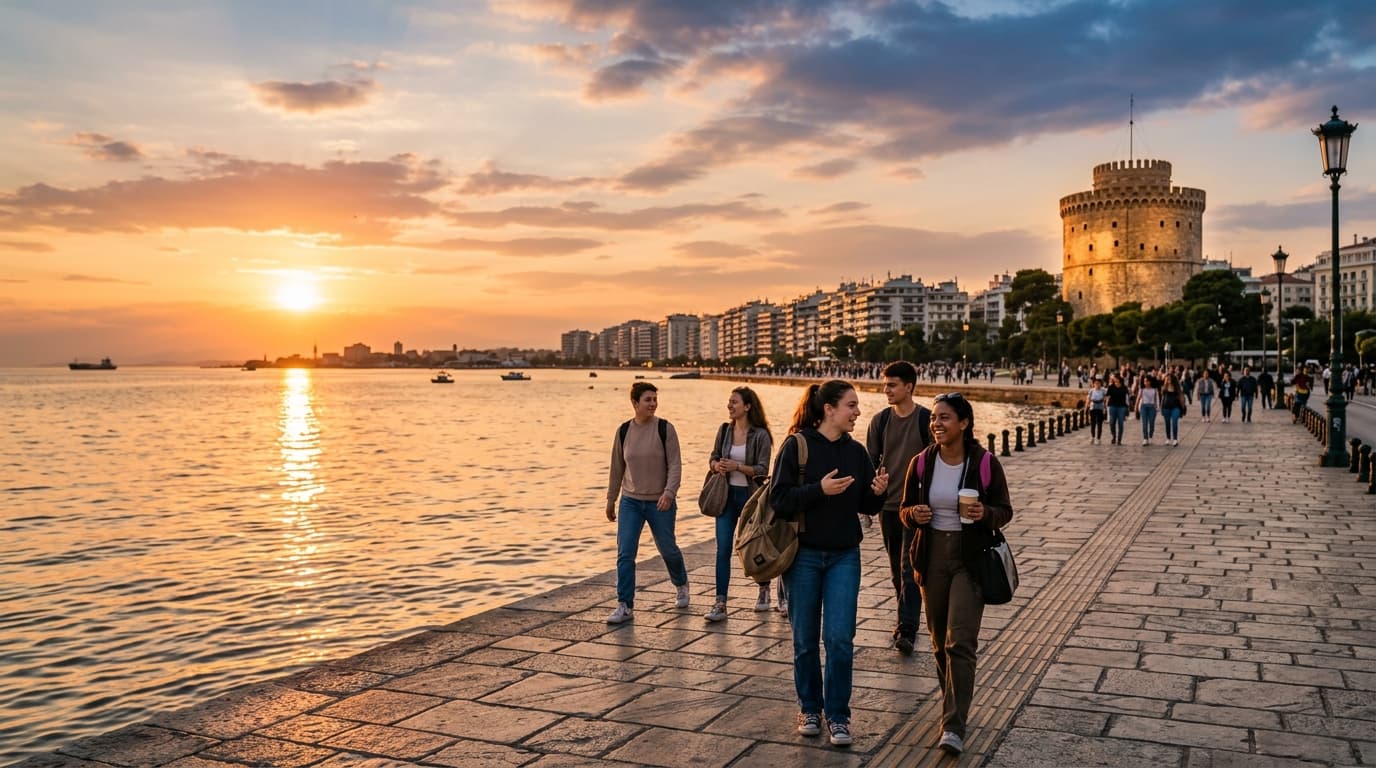
Sofia and Plovdiv 2026: why Bulgaria is a strategic Erasmus destination
Students searching for Erasmus accommodation in Sofia and Plovdiv for 2026 are part of a trend that has quietly reshaped the geography of Italian — and broader European — student mobility. Bulgaria offers a quality-of-life-to-cost ratio that no Western European capital can match, and it does so without the compromises that price gap might suggest. Sofia combines a vibrant university scene with a monthly budget that in Italy would barely cover rent alone; Plovdiv, the country's second city and European Capital of Culture in 2019, adds a thriving arts scene and a noticeably slower pace of life.
There is also a practical development that directly affects your wallet. On 1 January 2026 Bulgaria adopted the euro, becoming the twenty-first member of the eurozone, with an irrevocably fixed conversion rate of 1.95583 lev per euro. For a student this means three concrete things: no currency exchange fees on payments, no mental arithmetic in front of every price tag, and rent figures you can compare directly with those back home. Until 8 August 2026 prices were required by law to be displayed in both currencies, so students arriving in 2026 may still come across a few dual-currency signs.
On this basis, careful housing planning remains the first step towards a successful semester.
Sofia: neighbourhoods, rent map and university hubs
**"Serdica is my Rome"**
The phrase is attributed to Constantine the Great, who considered the ancient city of Serdica as a potential capital for his empire before choosing Byzantium. Roman ruins from that era are still visible today beneath street level, embedded in the walls of central metro stations — you walk past fourth-century remains while waiting for your train. Sofia has also kept its city motto, inscribed on the municipal coat of arms: it grows, but does not age. Anyone who spends a semester here soon understands why they chose it.
Neighbourhoods for student living
Sofia has an unusually clear urban layout for anyone looking for housing. The main reference point is Studentski Grad, literally "Student City", in the south-western outskirts of the capital: it clusters universities, student residences and a dense offer of bars and affordable restaurants built entirely around the student population. Anyone who wants to be close to their faculty and immersed in an international environment will find this the most obvious starting point.
The city centre (Tsentar) offers a different atmosphere: Vitosha Boulevard, the main museums, cafés and a cosmopolitan nightlife scene. Rents are higher, but only marginally so, and the central location means you can walk almost everywhere.
A third option that students frequently consider is Lozenets, an elegant and quiet residential neighbourhood with good public transport links to the centre. It suits those who prefer coming home in the evening to a peaceful area without sacrificing convenience.
Sofia rent overview
| Type of accommodation | Average monthly price |
|---|---|
| Room in a shared flat | **€300 – €450** |
| Private studio | **€450 – €600** |
| University dormitory (international students) | **€50 – €100** |
University dormitories are very cheap, but quality standards are not always up to scratch — which is why most exchange students prefer a room in a shared flat. It costs more, but it makes it much easier to connect with other Erasmus students or with Bulgarian flatmates, while also spreading living costs more evenly.
Adding up housing, food and leisure, the total monthly budget in Sofia falls between €500 and €700. To put that in perspective: it is less than what many students spend on rent alone in Madrid, Paris or Milan.
Main university hubs
The key institutions for the Erasmus programme in Sofia are:
- Sofia University "St. Kliment Ohridski": the oldest university in the country, founded in 1888.
- New Bulgarian University: known for its modern campus in Ovcha Kupel.
- University of National and World Economy (UNWE)
- Technical University of Sofia
One practical detail that can influence your choice of neighbourhood: Sofia sits at the foot of Mount Vitosha, which rises above 2,200 metres and is reachable from the city centre by public transport. For a student, that means hiking trails, snow and ski slopes within reach of a free afternoon — no trip to organise.
Plovdiv: an alternative perspective for Erasmus mobility
**The oldest city in Europe**
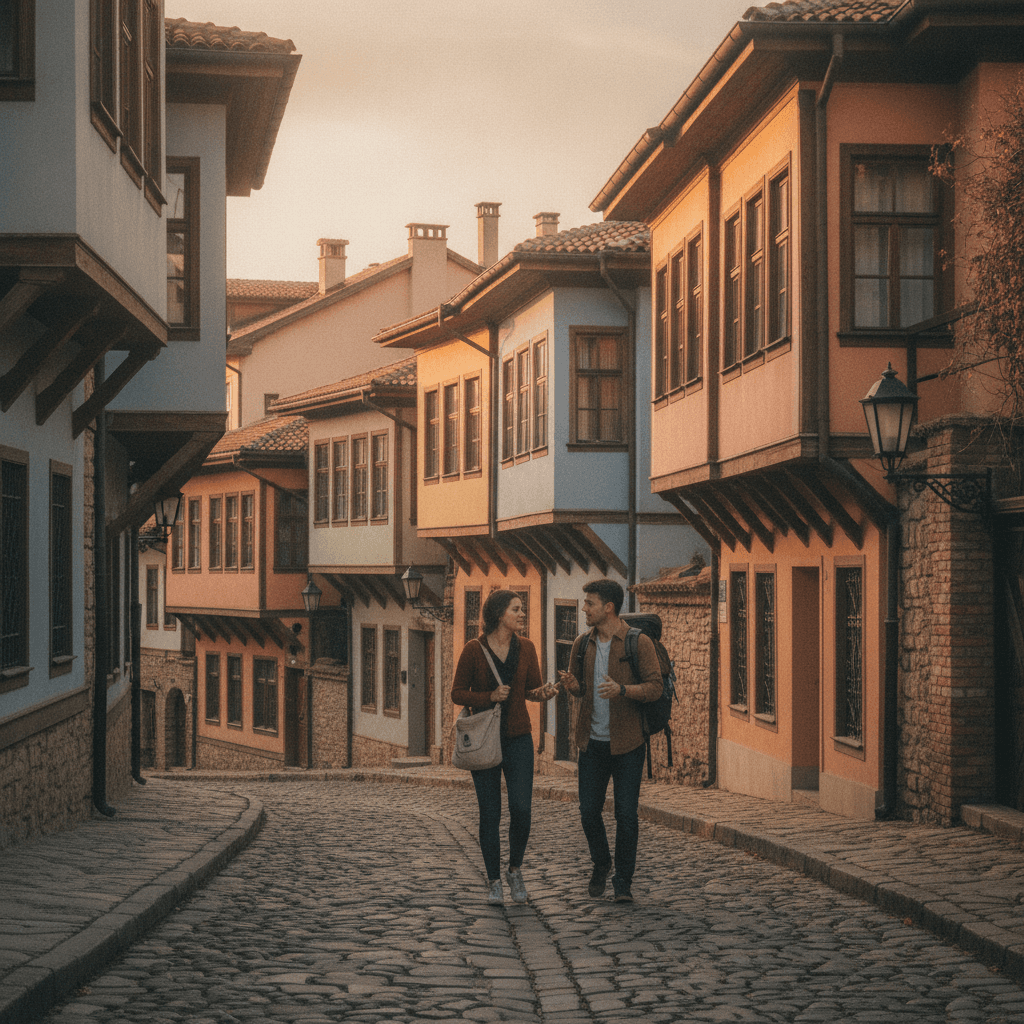
Plovdiv lays claim to a record that few cities in the world can challenge: approximately eight thousand years of continuous settlement, making it the longest continuously inhabited city in Europe. Thracians, Macedonians, Romans, Byzantines and Ottomans all passed through its hills without ever leaving it empty. The Roman Theatre of Philippopolis, built in the first century AD, was only rediscovered in 1972, brought to the surface by a landslide — today it hosts concerts and performances again, almost two thousand years after it was built. Studying in Plovdiv means walking through layers of history that elsewhere you would pay an entrance fee to glimpse.
What makes Plovdiv stand out
Plovdiv is Bulgaria's second-largest city, but it would be a mistake to treat it as a fallback option compared to the capital. Its ancient historic core, the bohemian Kapana district with its galleries and workshops, and a cultural calendar shaped by its year as European Capital of Culture all make it one of the most compelling Erasmus destinations in Eastern Europe. Compared with Sofia, it offers a slower pace, a tighter student community where faces become familiar, and even lower costs.
Plovdiv neighbourhoods and rent overview
The main residential area for students is Trakiya, a modern district with a wide range of housing at competitive prices. Those looking for a more atmospheric setting can explore the Old Town, with its cobbled streets, art galleries and the bars and cafés of Kapana.
| Type of accommodation | Average monthly price |
|---|---|
| Room in a shared flat | **€150 – €250** |
| Private apartment | **€300 – €450** |
In Plovdiv you can find a room in a shared flat for as little as €200 a month — and live comfortably on that budget, often better than the same amount would allow back home.
The university hub
The main reference point for Erasmus mobility is the University of Plovdiv "Paisii Hilendarski", one of Bulgaria's largest universities, with a solid offering of English-taught programmes and an active international community.
How to find safe Erasmus accommodation in Bulgaria
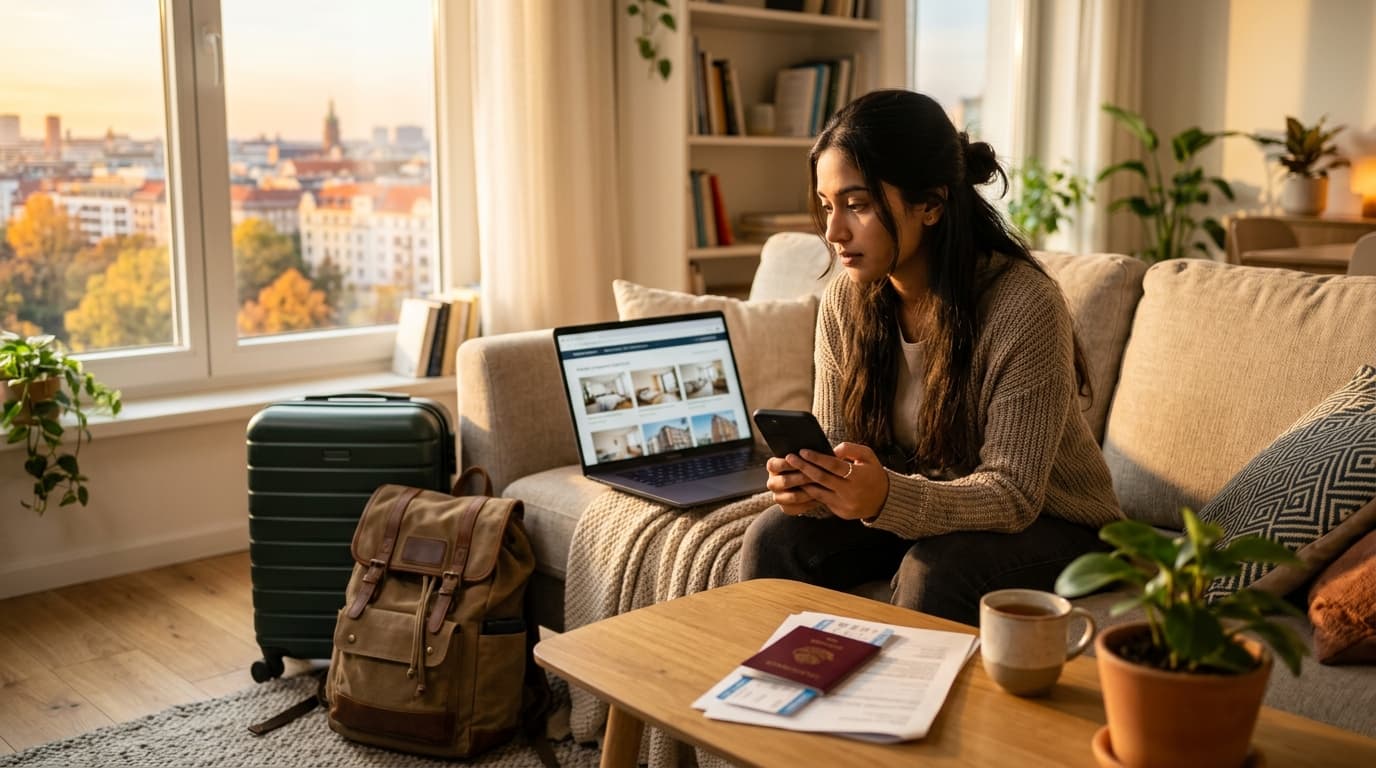
Searching for housing remotely, in a country where the alphabet itself is different and listings in English are limited, can feel like an insurmountable obstacle. It does not have to be, if you follow a few key steps:
- 1Start your search at least 2–3 months in advance. In Sofia and Plovdiv, the best options go quickly, especially ahead of the autumn semester.
- 2Verify the host's identity. Encountering listings that misrepresent the actual property is one of the most common issues reported by international exchange students.
- 3Use platforms that protect your payment. Avoid sending bank transfers before confirming that the host and listing have been verified.
- 4Check public transport connections. Sofia's public transport network is efficient and affordable: a monthly pass, estimated at between €15 and €20, covers the metro, trams and buses.
- 5Ask about your potential flatmates. Knowing in advance the nationality, habits and gender of the people you will be sharing with helps you make a more informed choice.
On ESH, every host's identity is verified before their listing goes live. Funds paid are held and protected via Stripe until check-in, and are not released to the host until 24 hours after your actual arrival. If a substantial discrepancy between the listing and the real condition of the accommodation is confirmed, the refund is full and includes the ESH Commission.
Cost of living for Erasmus students in Bulgaria: a breakdown
Beyond rent, here is a realistic estimate of everyday costs:
- Groceries: a budget of €150–€200 per month, thanks to a good network of affordable supermarkets.
- Eating out: from €3 to €7 for a full meal at a local restaurant.
- Public transport in Sofia: a monthly pass costs around €15–€20.
- Connectivity: high-speed internet is widely available, and local SIMs with data plans are inexpensive.
- Currency exchange: no longer an issue. With Bulgaria joining the eurozone in 2026, you pay no more exchange fees or ATM spreads — a cost that in previous years quietly ate into every Erasmus student's budget.
Bulgaria's cost of living remains among the lowest in the European Union, giving Sofia and Plovdiv an edge that is hard to match for an Erasmus experience in 2026.
Final thoughts
Searching for Erasmus accommodation in Sofia and Plovdiv for 2026 opens up opportunities that Western Europe has not offered for years, with rents in a completely different bracket. Choose the capital and you get history, modernity and a university energy that never really switches off; choose Plovdiv and you get a city eight thousand years old, a student community where everyone knows everyone, and costs that go even lower. In either case, Bulgaria offers a mobility experience that is unlikely to feel like just a side chapter in your journey.
To make the most of it, you need three things: start early, check the listing and the host carefully, and make sure your payment is protected before confirming any booking.
Browse verified accommodation listings in Sofia and Plovdiv on eshousing.com and head off on your Bulgarian Erasmus with housing already sorted.
Frequently Asked Questions
What is the cost of living for an Erasmus student in Sofia? Including accommodation, food and leisure activities, the estimated monthly budget falls between €500 and €700. Sofia is consistently ranked among the most affordable European capitals.
Is Plovdiv a good destination for an Erasmus experience? Absolutely. The University of Plovdiv "Paisii Hilendarski" has Erasmus agreements with universities across Europe. The city offers a dynamic environment, a student-friendly scale and very low living costs.
How far in advance should I start looking for Erasmus accommodation in Bulgaria? It is strongly recommended to begin your search at least 2–3 months before the start of your semester. The most sought-after options — particularly those in central areas or near university campuses — tend to go very quickly.
What precautions should I take to pay safely for Erasmus accommodation in Bulgaria? Use platforms that hold your funds in escrow until check-in, and avoid direct bank transfers before verifying the host's identity. With ESH, payments are processed via Stripe and kept protected until your arrival.
Which universities in Sofia and Plovdiv participate in the Erasmus+ programme? In Sofia: Sofia University "St. Kliment Ohridski", New Bulgarian University, UNWE and the Technical University of Sofia. In Plovdiv: the University of Plovdiv "Paisii Hilendarski". Always check with your home university's international relations office to confirm specific partnership agreements.